3 • Optional
Résumé de section
-
-
Creating your Google Scholar profile
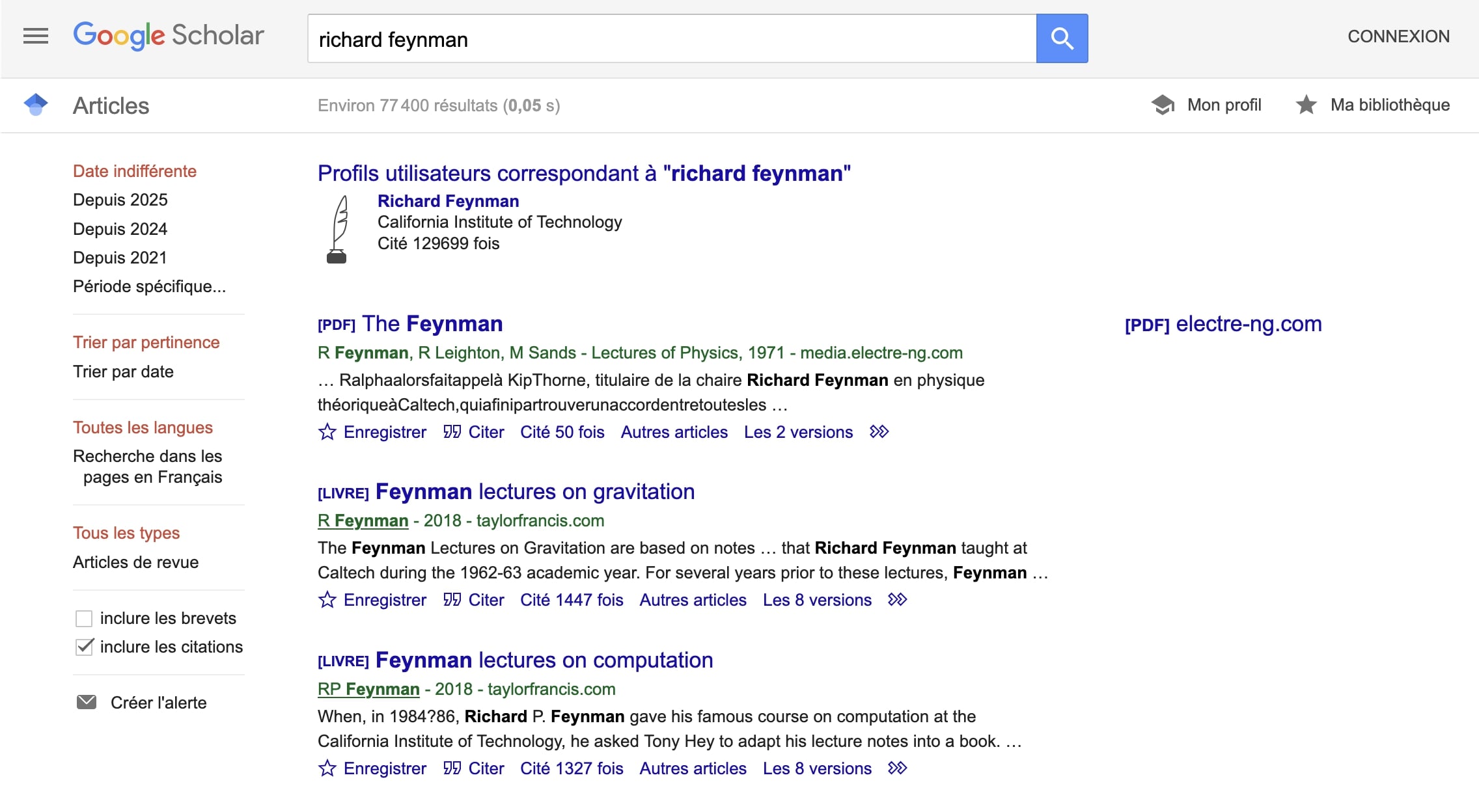
Google Scholar is an academic search engine launched in 2006. It remains the benchmark search tool in the world of science. It is therefore a good idea to create a profile and make sure that your publications are indexed and referenced in it.
Journalists often use Google Scholar profiles alongside institutional web pages to assess a researcher's expertise in a given field. The bibliometric data on publications visible via the profile need to be treated with caution, like any other data provided by indexes over which we have no control. What matters is to make sure that most of your publications are visible in your profile, regardless of the number of citations attached to each one.
Follow the tutorial provided by the University of Montreal libraries to set up your profile. If you already have one, proceed to the next step.
How to set up a Google Scholar profile and why you need one (in French). Bibliothèques UdeM (YouTube). Creative Commons Attribution License (reuse permitted)
-
Social media presence
Social media for scientists
Social media such as ResearchGate (all fields) and Academia.edu (focused on the humanities and social sciences), have become essential tools for researchers. They promote knowledge sharing, collaboration, and research work visibility. These platforms also allow you to create detailed profiles, upload and share your publications, track your work’s impact through readership and citation metrics, and connect with researchers around the world.
You need to tread carefully, however, when navigating these platforms. Intellectual property issues and the inconsistent quality of the papers listed must be taken on board if you want to maximize the benefits while limiting the risks.
Check the following table to help you choose the network best suited to your needs.
Details Academia ResearchGate Number of members 233 million 25 million Users Publicly funded researchers Academics Privately publicly funded researchers, Journalists and others Number of documents 47 million 160 million Types of documents Texts - Vidéo Texts, diagrams, research data, code, etc. Document downloads Yes Yes
(with author's permission)Profiles/Contacts/CV Yes Yes Blogs, Q&A Groups Yes Yes
NoCollaborations (on projects or conferences) No Yes Document comments No Yes Statistics Profile + document viewing Yes (very detailed) Source: CNRS. Sharing and showcasing your research via social media, 2023.


Academia
A social network for scientists focused on the humanities and social sciences.
Academia siteBy leveraging these benefits, you can boost your visibility, develop your professional network, stay informed, and seize new collaboration or employment opportunities.
-
Microblogging social networks
The following microblogging social networks can also help you increase your online visibility and communicate and exchange ideas on your research with the scientific community. You can use them to showcase your thesis and your work, by increasing the number of related citations in particular.
Mastodon and BlueSky are decentralized social networks and are currently the most widely used in academia. Choosing a decentralized network like the Fediverse on Mastodon promotes openness, transparency, and control. To join the Fediverse, create an account on one of the existing instances, which in no way prevents access to publications from other instances, in fact quite the opposite.
Benefits of using a microblogging social network:
- Visibility and professional influence
- Developing your professional network
- Monitoring and continuous learning
- Community engagement and facilitation
-
Sharing content and expertise
- Personal brand management
- Easier access to new opportunities
By leveraging these benefits, you can boost your visibility, develop your professional network, stay informed, and seize new collaboration or employment opportunities.


-
LinkedIn, the professional network
As a doctoral student, a LinkedIn profile can help you:
- Establish and showcase your professional profile online
- Expand your professional and academic network
- Stay tuned with updates and trends in your field
- Boost your visibility and nurture your brand image
- Search for jobs or postdoctoral opportunities
Be active on LinkedIn
- Publish posts related to your research work
- Join LinkedIn groups relevant to your scientific community
- Interact with your contacts (colleagues, collaborators, etc.)
- Keep up with developments in your field
Keep your LinkedIn profile up to date, keeping it relevant with your career path and current activities. Good housekeeping will help you gain visibility and make a name for yourself within your scientific community.

-